
One of the advantages of a portable digital piano is that you can decide how it fits into your home.
But that also leaves you with a choice: what should you put it on?
For most digital pianos, there are three obvious options: a simple X-stand, a dedicated furniture stand, or a wall-mounted piano stand. All three can work well, but they solve very different problems.
The right choice depends less on which stand is “best” and more on how you use your piano, where you keep it, and whether you want it to feel portable or permanent.
The short answer
- Choose an X-stand if affordability, adjustability and portability matter most.
- Choose a furniture stand if your piano will stay in one place and you want a traditional digital-piano setup.
- Choose a wall-mounted stand if your piano has a permanent place in your home and you want to keep the floor open and integrate the instrument more deliberately into the room.
Here is the basic comparison:
| X-stand | Furniture stand | Wall-mounted stand | |
|---|---|---|---|
| Portable | Excellent | Low | No |
| Adjustable height | Usually | Usually fixed | Set during installation |
| Floor space | Uses floor space | Uses floor space | Keeps floor open |
| Legroom | Can be restricted | Generally good | Open underneath |
| Appearance | Functional | Piano-like | Furniture/interior focused |
| Installation | Very easy | Assembly required | Wall installation required |
| Best suited to | Flexible setups and travel | Permanent traditional setups | Permanent home setups |
1. X-stand: simple, affordable and portable
The X-stand is probably the most familiar keyboard stand.
Its biggest advantage is flexibility. It folds away, is relatively light, works with many different keyboards and is usually inexpensive.
That makes it particularly useful if you move your piano regularly, play outside the home, need to store the stand after playing, or simply want an inexpensive way to get started.
A good quality X-stand can be a perfectly sensible solution.
There are, however, compromises.
Because the two legs cross underneath the keyboard, an X-stand can reduce the space available for your knees and pedals when playing seated. Some players also experience movement or wobble, particularly with lightweight stands, heavier digital pianos or more forceful playing.
This does not mean every X-stand is unstable. Construction quality, weight capacity, floor surface and adjustment all matter.
Best for: portability, flexibility, smaller budgets and setups that regularly move.
2. Furniture stand: turning a portable piano into a permanent setup
Many digital-piano manufacturers offer a dedicated stand designed specifically for a particular piano model.
Instead of sitting on a universal metal frame, the piano is attached to a stand with two side panels and cross-members. The result looks more like a conventional digital piano.
This is a good solution when the piano has a permanent place.
A dedicated stand normally provides plenty of room for seated playing and removes the visual X-shaped structure underneath the instrument. Depending on the piano, it may also integrate with a manufacturer's three-pedal unit.
The trade-off is that a portable digital piano effectively becomes much less portable once installed.
The stand also adds another object to the room. Its side panels and base remain visible and occupy floor space even though the piano itself may be relatively slim.
Best for: players who want a conventional, permanent digital-piano setup and have no need to move the instrument regularly.
3. Wall-mounted stand: treating the piano as part of the room
A wall-mounted piano stand takes a different approach.
Rather than supporting the instrument from the floor, the frame is fixed to the wall. The digital piano sits in a frame made for its dimensions, leaving the space underneath open.
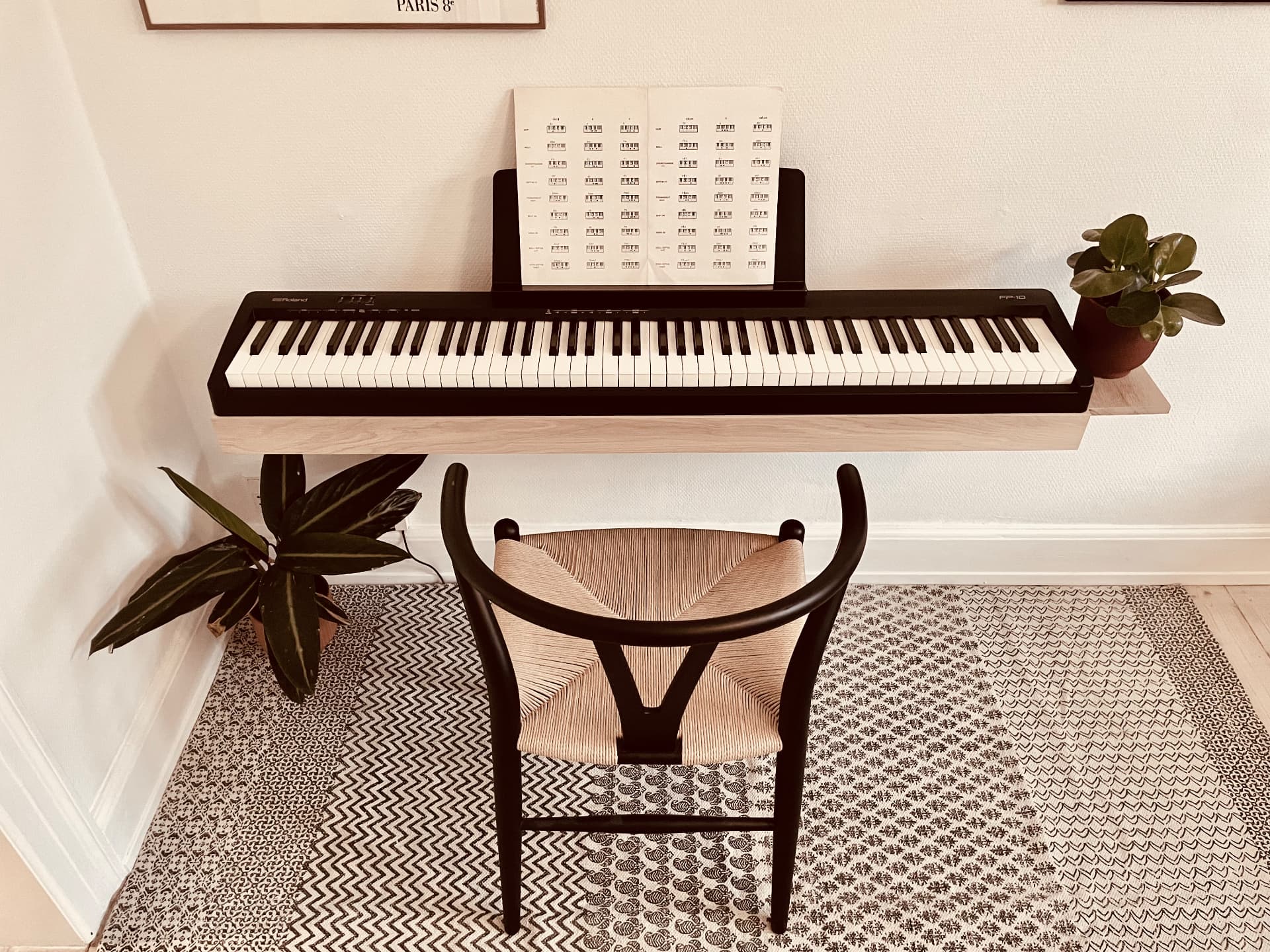
For a piano that stays permanently in a living room, bedroom or dedicated music space, this changes both the practical and visual relationship between the instrument and the room.
There are no stand legs underneath the piano, and the open floor can make the setup feel lighter. It also allows the piano to be combined with materials such as wood rather than relying entirely on the black or white surfaces typical of digital instruments.
The compromise is permanence.
A wall-mounted stand is not the right choice if you regularly move your piano. Installation also needs to suit the wall construction, the weight of the instrument and the requirements of the particular mounting system.
Unlike an adjustable X-stand, the playing height is established when the frame is installed, so it should be considered carefully before mounting.
Best for: permanent home setups where floor space, legroom and integration with the interior matter.
What about stability?
Stability is one of the most common concerns when choosing a digital-piano stand.
But stand type alone does not determine stability.
A well-built X-stand used within its rated load can be stable, while a poorly assembled stand of any type can cause problems.
With an X-stand, pay attention to the stand's load rating, locking mechanism, width and contact with the floor.
With a manufacturer furniture stand, make sure it is designed for your exact piano and assembled according to the manufacturer's instructions.
With a wall-mounted stand, the wall itself becomes part of the supporting structure. Correct mounting for the particular wall construction is therefore essential.
What about legroom and pedals?
If you mostly play sitting down, this deserves more attention than it normally gets.
The crossed structure of an X-stand sits exactly where your legs and pedals need to go. Depending on your height, stand width and playing position, this may not bother you at all — or it may become something you notice every time you sit down.
Furniture stands move the structure towards the sides of the piano.
Wall-mounted stands remove floor-standing support altogether, leaving the area beneath the piano open.
If you use several pedals or are tall, test your seated position before deciding.
Which stand looks best in a living room?
This is subjective, but it is also a legitimate part of the decision.
Digital pianos such as the Roland FP and Yamaha P series are deliberately compact. Their portability is an advantage, but placed on an X-stand they can still have the appearance of equipment rather than furniture.
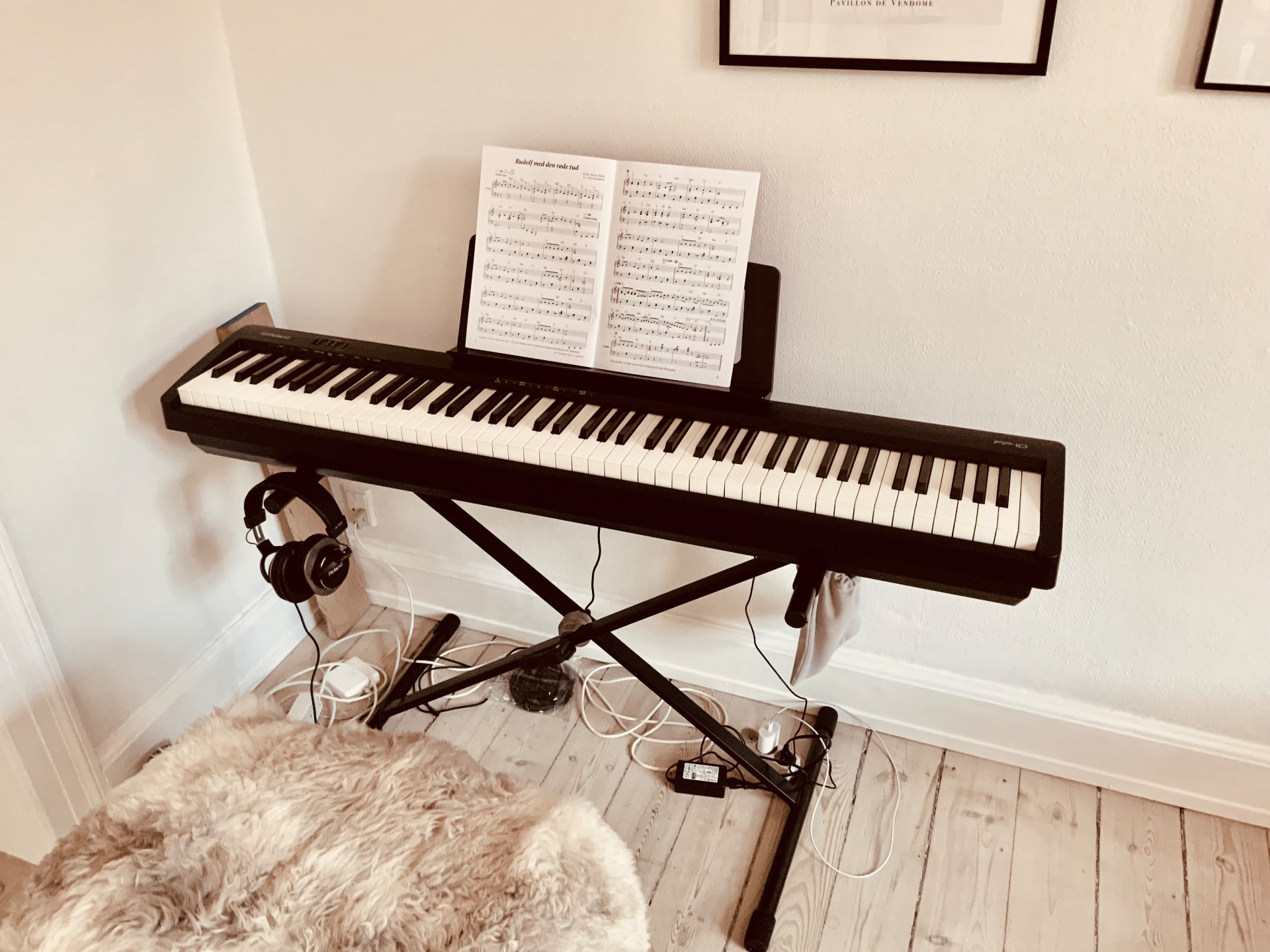
A dedicated manufacturer stand creates a more conventional piano silhouette.
A wooden wall-mounted frame takes another approach: instead of trying to make the portable piano resemble an upright piano, it allows the instrument to remain slim while integrating it into the architecture and furniture of the room.
The best choice depends on whether you want your piano to look portable, traditional or deliberately integrated into your interior.
Ask yourself these five questions
Before choosing a stand, consider:
- Will I move the piano regularly? If yes, an X-stand is difficult to beat.
- Will I mostly play sitting down? Think about knee room, pedal placement and playing height.
- Is the piano going to stay in the same place for years? If yes, a furniture stand or wall-mounted solution becomes more relevant.
- Is floor space important? A wall-mounted stand is the only one of the three that does not require floor-standing supports.
- Do I want the piano to look like equipment or part of the furniture? There is no correct answer, but it can completely change which solution makes sense.
So which digital piano stand should you choose?
There is no universal winner.
If you play gigs, move your piano regularly or simply want an affordable and flexible setup, choose a good X-stand.
If your piano stays at home and you like the appearance of a traditional digital piano, a model-specific furniture stand is probably the most straightforward solution.
If the piano has a permanent place in your home, and you care about keeping the floor open and making the instrument part of the room, a wall-mounted stand offers a third option.
At Kvint Copenhagen, this last problem is the one we set out to solve.
Our Floating Piano Frames are wall-mounted stands handcrafted in solid oak and designed for selected Roland and Yamaha digital pianos. Each frame is made for the dimensions of a specific piano model and includes concealed cable management.
You can explore the available piano frames and find the version designed for your digital piano.