
Support
Frequently Asked Questions
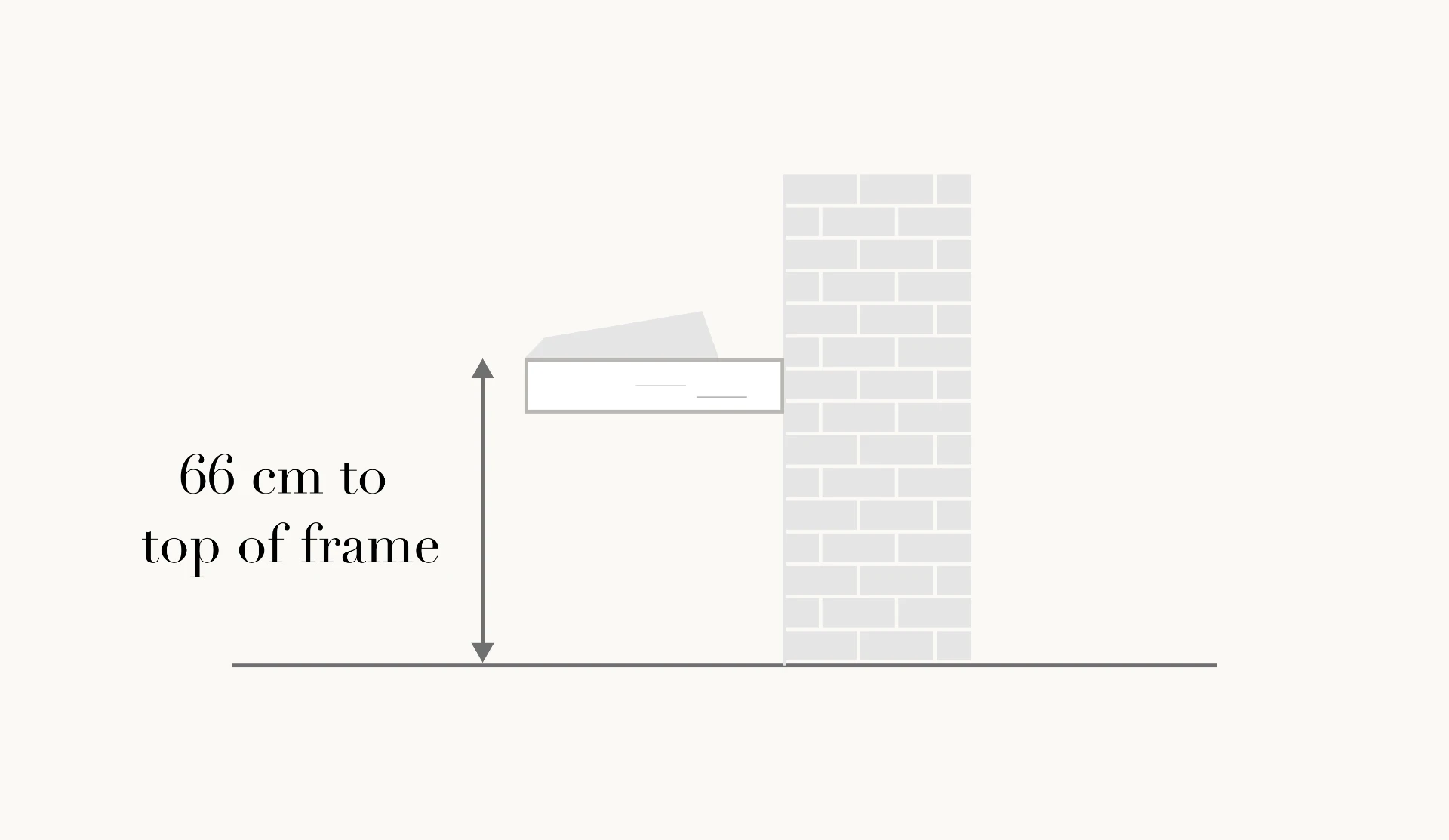
How high up on the wall should I mount the Floating Frame?
It depends on your personal preference, but based on other piano stands there is a consensus of 66 cm from the floor to the top of the Floating Frame. That is our recommendation — some players find it slightly low, so measure against your own seating height first.
How do I mount the Floating Frame to the wall?
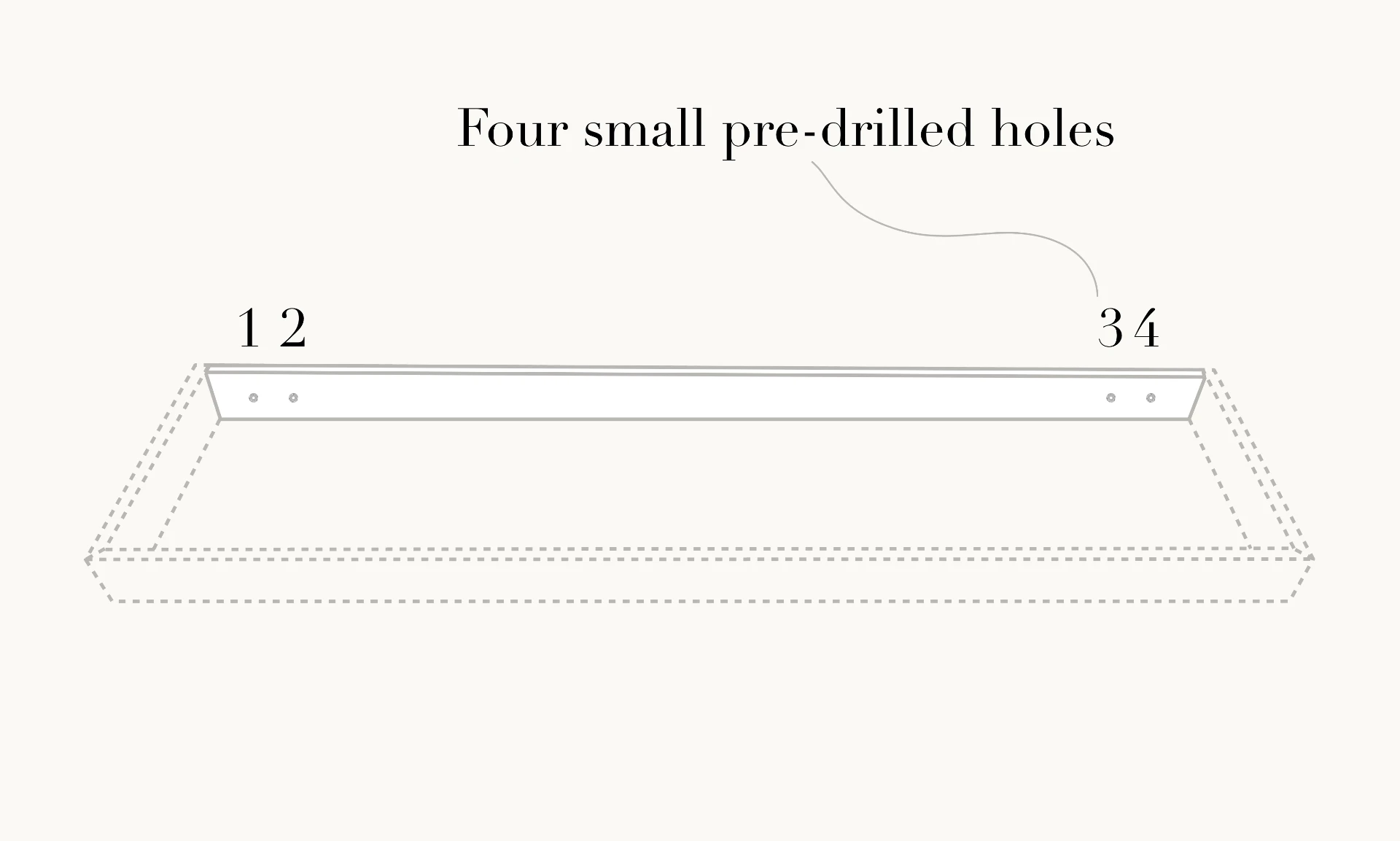
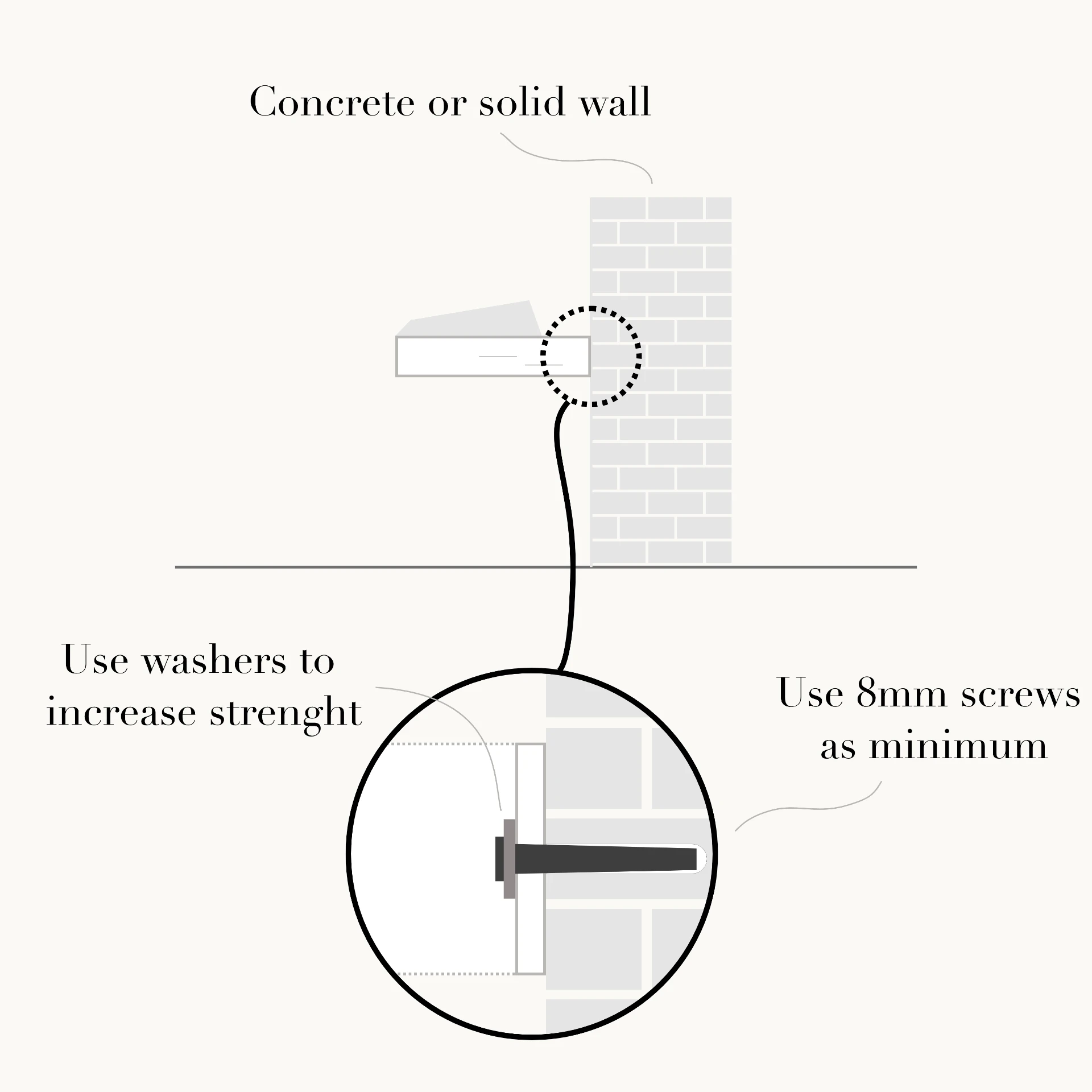
There are 4 small holes pre-marked in the back plate showing where to mount the frame. Step 1: drill those 4 holes out to the size of your screws (we recommend 8 mm or 10 mm). Step 2: drill 4 matching holes in the concrete wall and insert raw plugs. Step 3: mount the frame directly to the solid wall through the back plate, using washers between the screw head and the back plate for extra strength. Note: screws are not included with the Floating Frame.
Can the frame be mounted on any wall?
The correct method depends entirely on your wall construction. Solid concrete or brick walls are ideal. For stud, plasterboard or hollow walls you must fix into the load-bearing structure with appropriate fixings. If you are in any doubt, consult a qualified professional before mounting.
Which digital pianos fit the frame?
We make standard Floating Piano Frames for the Roland FP-10, FP-30 and FP-30X, and for the Yamaha P-45, P-95, P-105, P-115, P-121, P-125, P-125a, P-145 and P-225. Always check the individual product page to confirm compatibility with your exact model.
Is the frame made from solid oak?
Yes. Every Floating Piano Frame is handcrafted from solid oak. We strive to use FSC-certified oak wherever possible. Available finishes may differ between products.
Which brands and models are available?
Floating Piano Frames are made for selected Roland and Yamaha digital pianos only. If your instrument is not listed on the Roland or Yamaha collection pages, we do not currently have a matching frame.
Does the frame handle cables?
Yes. The back cover has a cord management hole so the power supply and pedal cables can be routed neatly out of sight.
Where is Kvint Copenhagen based?
Kvint Copenhagen is based in Copenhagen, Denmark. The frames are designed by founder Rasmus Fisker with a focus on Nordic simplicity, functionality and craftsmanship.
Still unsure? Contact us or browse all piano frames.